




Anastasia SternbergGet in touch
Anastasia Sternberg portrait

01 — Introduction

Hi, I'm Anastasia, a dually trained Human Factors Engineer and Senior UX Researcher with 10+ years in safety-critical UX from healthcare to aviation.

02About

I run end-to-end research as the sole researcher on my projects — from stakeholder alignment through synthesis and final readout.

My background spans regulated, high-stakes environments where getting the user experience wrong has real consequences: surgical teams in the OR, pilots in the cockpit, clinicians during a system-wide eHR rollout. I bring that same rigor to every product I touch, translating deep research discipline into insights teams can act on fast.

03Selected work
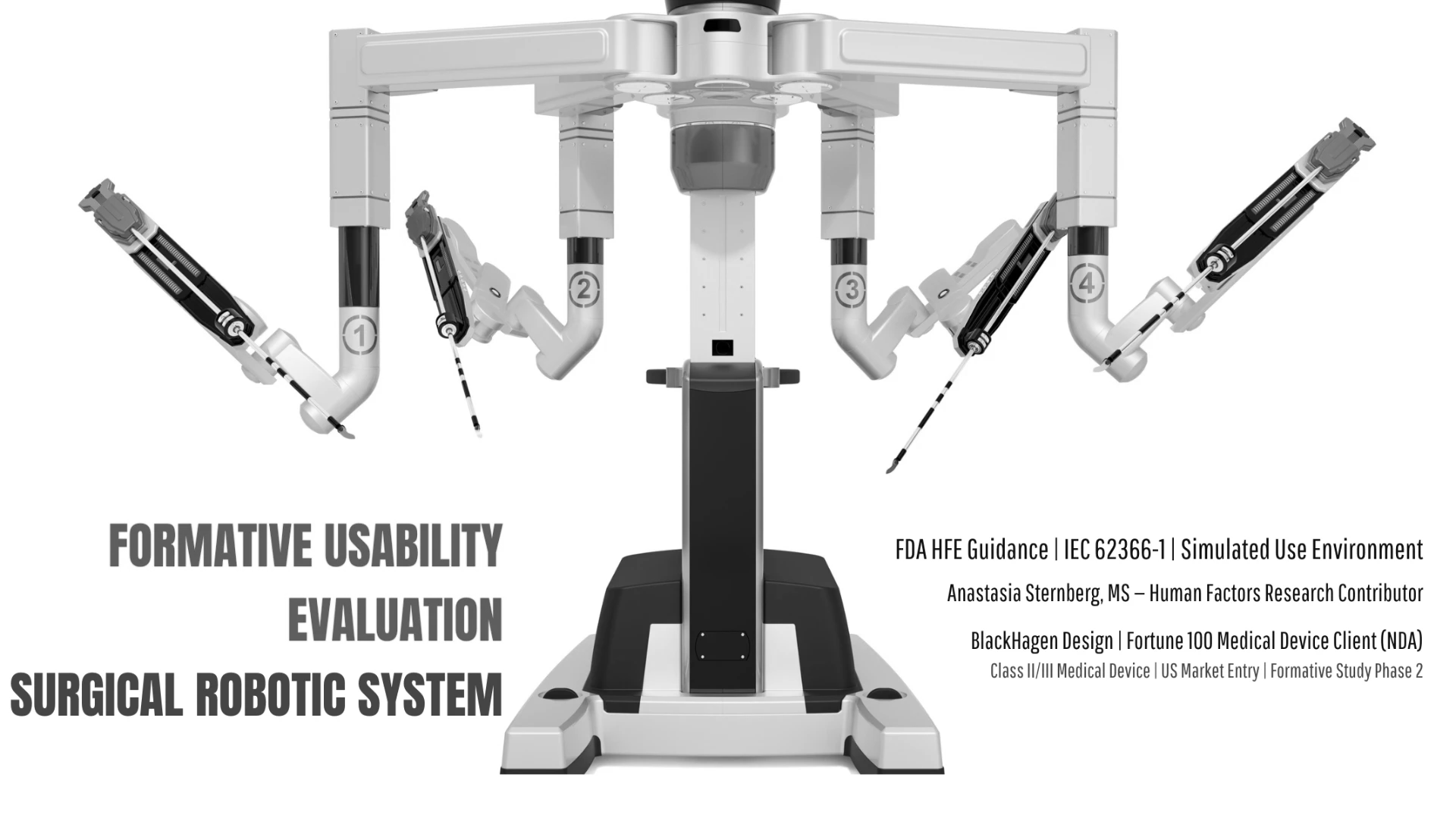
Cutting usability risk in a robotic surgery system
BlackHagen Design2022

Cutting usability risk in a robotic surgery system

Ran a 200-point Use-Related Risk Analysis for a robotic surgical device, identifying 30+ critical use errors — 90% mitigated before launch.

Brief overview

Formative Usability Evaluation — Surgical Robotic System · BlackHagen Design — Fortune 100 medical device client (NDA)

Context. A Fortune 100 medical device company's next-generation surgical robotic system, undergoing formative usability evaluation ahead of FDA clearance for US market entry.

Challenge. Validate that surgical teams could safely operate the device console in high-stress OR environments, with particular risk concentrated in instrument insertion and hand-control calibration, under FDA HFE Guidance and IEC 62366-1.

Solution. Designed and helped moderate a mock-OR usability study with sterile-field fidelity across four surgical roles — surgeon, surgical assistant, circulating nurse, and scrub nurse/tech — using think-aloud and task-based protocols. Contributed session data and synthesis directly into a 200-point Use-Related Risk Assessment (URRA).

Results

  • Identified 30+ critical use errors across formative phases
  • Majority of identified errors mitigated through design controls before summative validation
  • Contributed to a URRA supporting a successful FDA 510(k) submission

Methods & Tools. Think-Aloud Protocol · Task-Based Usability Testing · Use-Related Risk Assessment (URRA) · IFU & Documentation Review

Frameworks. IEC 62366-1 · ISO 14971 · FDA HFE Guidance · FDA 510(k)
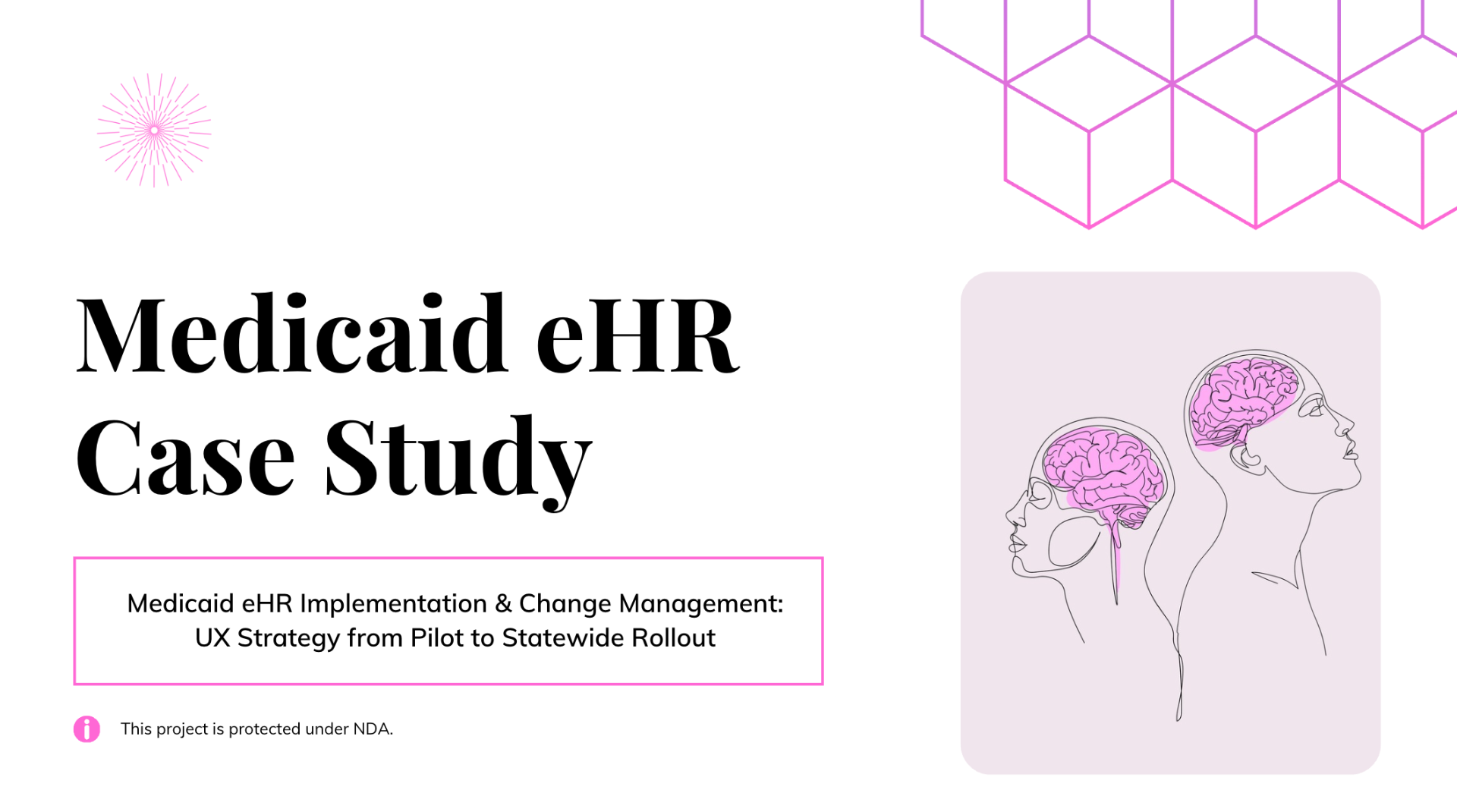
Usability assessment for a $1M Medicaid eHR rollout
SMRC2021

Usability assessment for a $1M Medicaid eHR rollout

Conducted observational research with clinicians and trainers during a system-wide eHR implementation, informing pre-launch usability recommendations and risk mitigation.

Brief overview

Medicaid eHR Implementation & Change Management · NIH-funded university social work program — statewide Medicaid Waiver rollout

Context. A statewide Medicaid Waiver eHR rollout serving IDD populations, led by a 3-person NIH-funded research team embedded within a university social work department.

Challenge. A new eHR system launched alongside a major change-management shift from paper-based documentation, increasing cognitive load, disrupting clinician-patient rapport, and introducing new use errors across a 5-year statewide rollout.

Solution. Served as embedded field researcher and clinical implementation advisor for 5 years — running ethnography, contextual inquiry, usability testing, A/B testing, focus groups, and interviews across all four rollout phases. Translated findings into quarterly stakeholder reports and statewide clinician training.

Results

  • Trained 2,000+ clinicians and administrators across the statewide rollout
  • Capped caseloads at 32 and documentation fields at 20 (down from a proposed 50) based on cognitive-load findings, reducing errors and burnout
  • Recommendations shaped a phased paper-to-tablet transition that increased adoption

Methods & Tools. Ethnography · Contextual Inquiry · Usability Testing · A/B Testing · Focus Groups · Service Blueprint

Frameworks. HIPAA · Medicaid Waiver Compliance · DMH/BIDD Regulatory Requirements

Scaling EFB research across 200+ airlines
ForeFlight2023

Scaling EFB research across 200+ airlines

Led full-motion flight simulation testing and a cross-regional gap analysis across US, European, and Asia-Pacific airlines, informing feature prioritization on the product roadmap.

Brief overview

FliteDeck ProX · Jeppesen's FliteDeck ProX Electronic Flight Bag — ForeFlight, a Boeing Company

Context. ForeFlight, a Boeing company, building the airline industry's first fully integrated Electronic Flight Bag (EFB) — consolidating flight planning, charts, weather, and hazard awareness into a single safety-critical tool.

Challenge. Pilots needed to replace fragmented, paper-based workflows without adding risk in high-workload cockpit environments, all while meeting strict FAA/EASA usability guidelines for the 4.8-to-5.0 feature transition.

Solution. Conducted high-fidelity LOFT simulation testing (real routes, diversions, geographic edge cases), moderated usability sessions using think-aloud, SUS, and NASA TLX, A/B testing of briefing and integration flows, and FAA/EASA heuristic evaluations. Led a gap analysis across 200+ airline operators globally to prioritize the roadmap.

Results

  • Gap analysis across 200 operators spanning 3 continents directly informed feature prioritization
  • Validated designs reduced briefing time and heads-down time for pilots
  • Findings shaped trust-signal requirements for new digital sync features and confirmed the need for manual override on Auto SID/STAR

Methods & Tools. LOFT Simulation Testing · Moderated Usability Testing (SUS, NASA TLX) · A/B Testing · Cognitive Walkthroughs · FAA/EASA Heuristic Evaluation

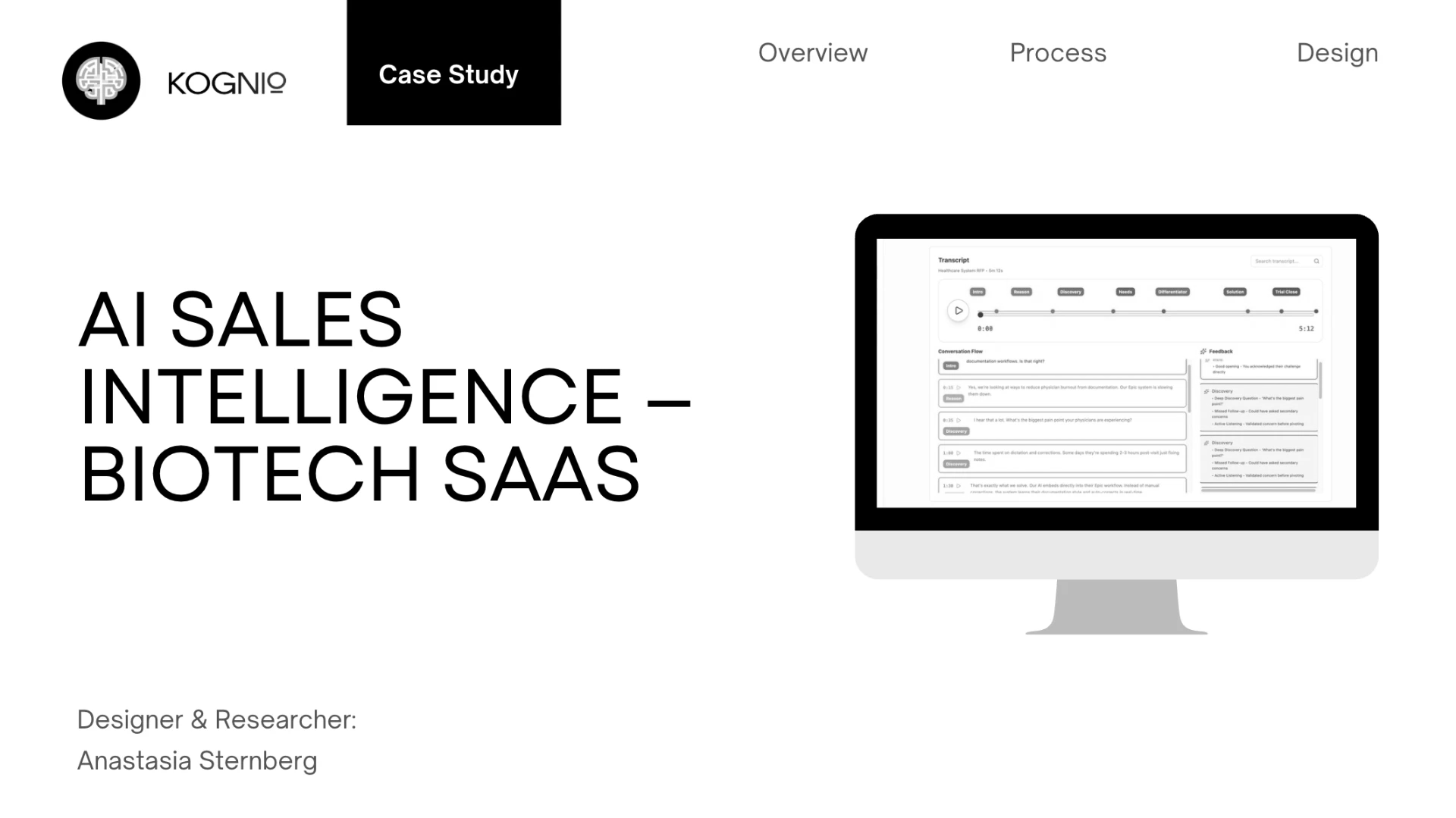
Project: No Delay — Cognitive overload and flight delays
Kognio Labs2025

Project: No Delay — Cognitive overload and flight delays

Investigated how cognitive overload in flight crews contributes to operational delays, translating findings into actionable design and workflow recommendations.

🔒 Password protected

Brief overview

No Delay · Redesigning a legacy pilot operations platform — major global airline carrier

Context. One of the world's largest airline carriers, running a 40-year-old legacy platform for pilot and ground-support operations.

Challenge. An 18-section navigation structure buried critical pre-flight and post-flight information behind layers of submenus. A requirement that all content be published led to severe information overload for pilots and support staff who needed answers in seconds, not minutes.

Solution. Led a 10-month research engagement — 40+ interviews, live card sorting, contextual inquiry with duty pilots in ground control, and iterative testing across web and mobile — to restructure the platform's information architecture from the ground up.

Results

  • Restructured IA from 18 navigation categories down to 5
  • 1,000+ pieces of content tagged and organized into a working hierarchy
  • Findings directly informed the platform's CMS relaunch and handoff content templates

Methods & Tools. Contextual Inquiry · Card Sorting · Journey Mapping · Jobs-to-be-Done · A/B Testing · Aurelius · Dovetail · Airtable

04Methods & skills

Research methods

Contextual inquiry, usability testing (formative & summative), heuristic evaluation, task-based analysis, root-cause analysis, concept validation testing, simulation lab testing, card sorting, journey mapping, service blueprints, stakeholder workshops.

Regulatory fluency

  • FDA guidance
  • IEC 62366-1/2
  • ISO 13485
  • ISO 14971
  • ISO 9241-220
  • HE 75

Tools

LookbackFigmaDovetailCondensOptimal WorkshopAirtableSurveyMonkeyClaudeCoworkLovable
05Career
  1. 2023 — NowHuman Factors ConsultantKognio Labs
  2. 2022 — 2023UX Researcher & Human Factors SpecialistForeFlight
  3. 2021 — 2022Usability SpecialistBlackHagen Design
  4. 2012 — 2021Service DesignerSMRC

06 — Let's talk

I'm currently exploring UX research work in healthcare and other regulated or high-stakes product spaces.

If that overlaps with what you're building, I'd love to talk.